Peter Obi · The Anambra Record
Background: The State, Its Vision and Strategy
Text on this page
Read from the scan by machine, so it may contain mistakes.
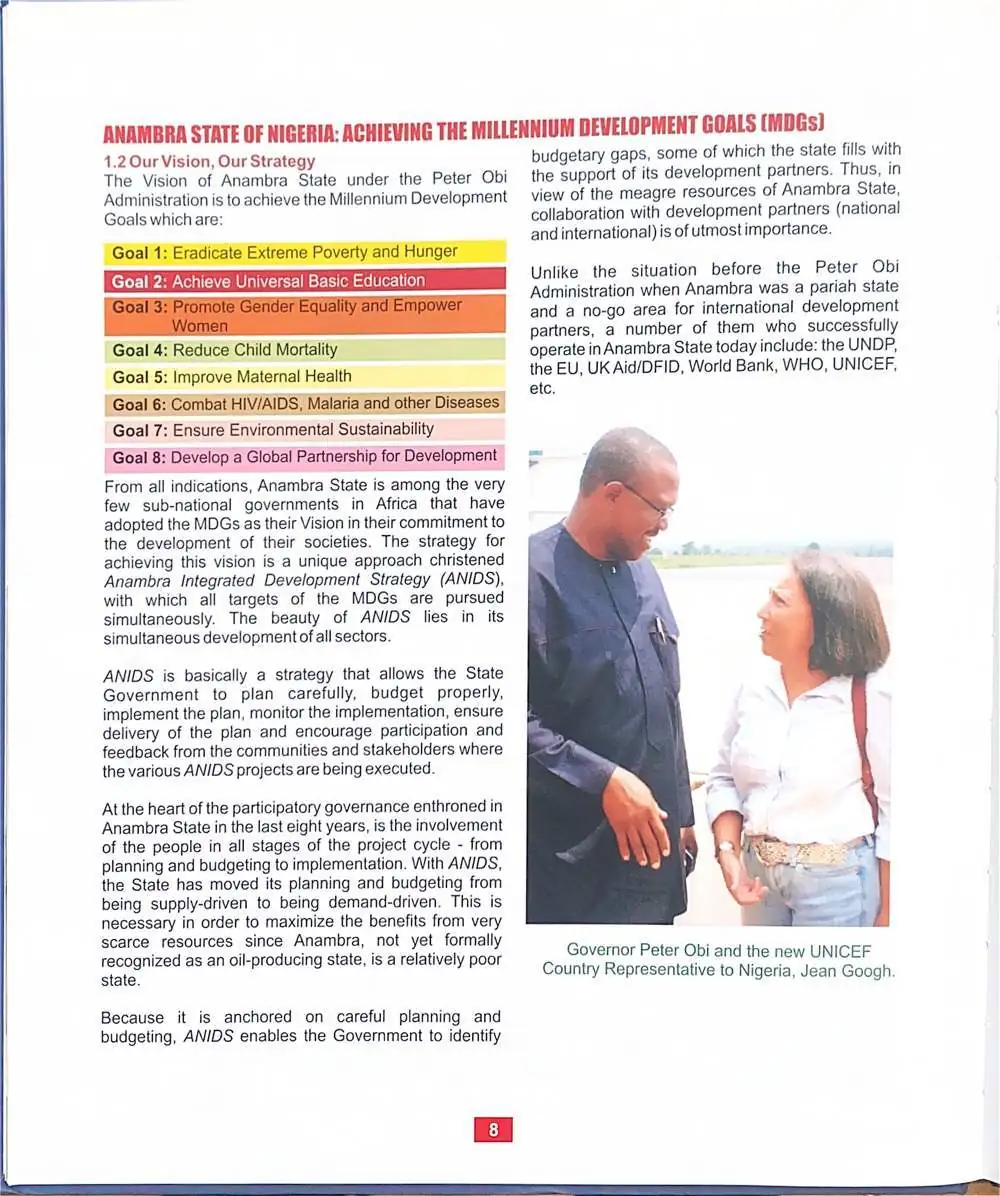
ANAMBRA STATE OF NIGERIA: ACHIEVING THE MILLENNIUM DEVELOPMENT GOALS (MDGsJ 1.2 Our Vision, Our Strategy The Vision of Anambra State under the Peter Obi Administration is to achieve the Millennium Development Goals which are: • Eradicate Extreme Poverty and Hunger Goal 1. Achieve Universal Basic Education Goal 2: • Promote GéhdéÆqualitYåWEmpower Goal 3. Women • Reduce Child Mortality Goal 4. Improve Maternal Health Goal 5: • Combat HIV/AIDS, Malaria and other Diseases Goal 6. • Ensure Environmental Sustainability Goal 7. : Develop a Global Partnership for Development Goal 8 From all indications, Anambra State is among the very few sub-national governments in Africa that have adopted the MDCs as their Vision in their commitment to the development of their societies. The strategy for achieving this vision is a unique approach christened Anambra Integrated Development Strategy (ANIDS), with which all targets of the MDGs are pursued simultaneously. The beauty of AMDS lies in its simultaneous development of all sectors. ANIDS is basically a strategy that allows the State Government to plan carefully. budget properly, implement the plan, monitor the implementation, ensure delivery of the plan and encourage participation and feedback from the communities and stakeholders where the various ANIDS projects are being executed. At the heart of the participatory governance enthroned in Anambra State in the last eight years, is the involvement of the people in all stages of the project cycle - from planning and budgeting to implementation. With ANIDS, the State has moved its planning and budgeting from being supply-driven to being demand-driven. This is necessary in order to maximize the benefits from very scarce resources since Anambra, not yet formally recognized as an oil-producing state, is a relatively poor state. Because it is anchored on careful planning and budgeting, ANIDS enables the Government to identify budgetary gaps, some of which the state fills with the support of its development partners. Thus, in view of the meagre resources of Anambra State, collaboration with development partners (national and international) is of utmost importance. Unlike the situation before the Peter Obi Administration when Anambra was a pariah state and a no-go area for international development partners, a number of them who successfully operate in Anambra State today include: the UNDP, the EU, UKAid/DFlD, World Bank, WHO, UNICEF, etc. Governor Peter Obi and the new UNICEF Country Representative to Nigeria, Jean Googh.